A buffalo hunter gave me a set of horns when I was a child.
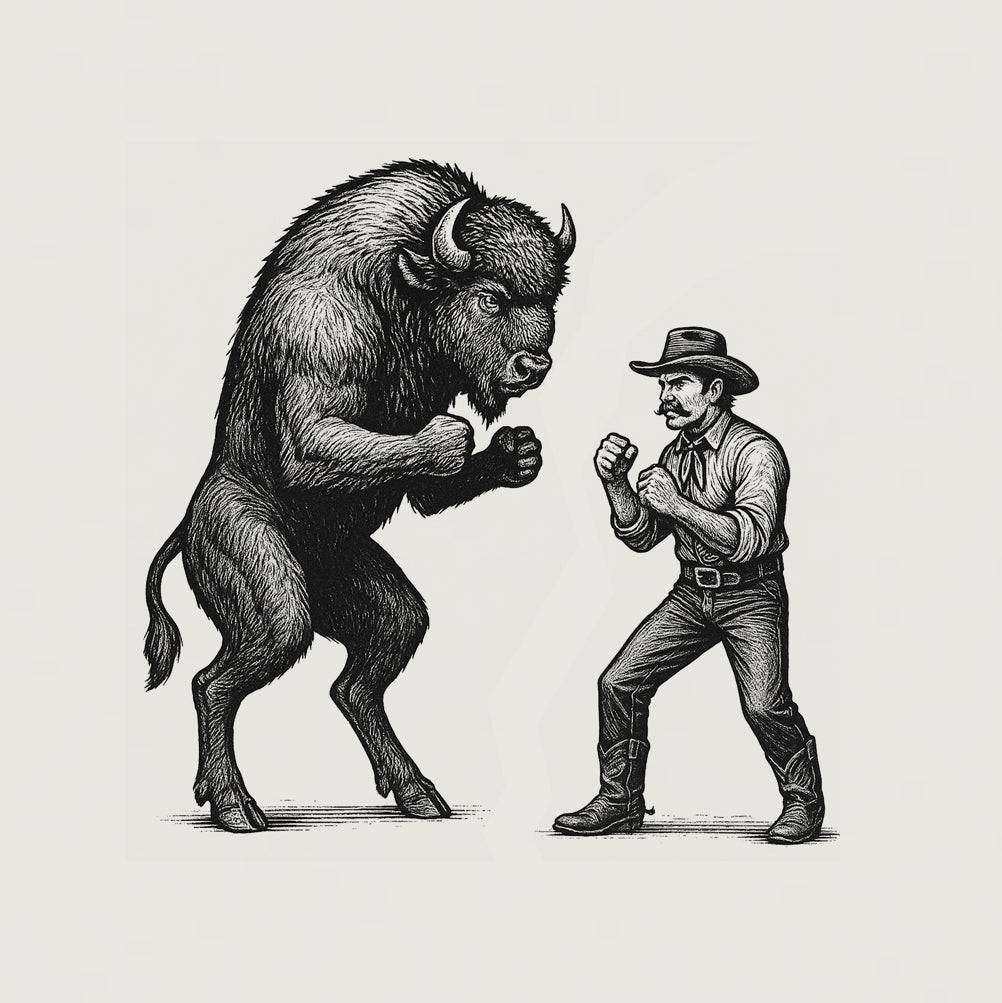
Two huge horns, thick and brutal, mounted on a rusted chain. He told me he’d wrestled the animal to the ground with his bare hands.
He said it took three hours. Most of it was convincing the buffalo to stay down. That part, he said, required a kind of respect.
When he gave me the horns, he told me to hang them somewhere strong. I chose a wall in the living room. Drilled two bolts. The chain clanked when it settled. It sounded like something that had seen things.
When I met my wife, the horns were moved to rooms with less traffic.
But they stayed.
Every time I was asked to move them, I explained their importance with more and more conviction. Desperately trying to capture some of the magic of the original telling. She smiled a sort of sad smile the first time. I didn't.
“How exactly did he wrestle a buffalo?” she asked.
“With his hands,” I said.
“His hands?”
“Bare hands.”
By the tenth time, I put them in the attic.
Years passed. The hunter grew old. When he died, I went to his funeral. The room was full. People wore practical jackets. During the slideshow, I scanned the room for other buffalo hunters, someone to confirm the story. But buffalo hunters just look like regular people in funeral attire.
The slideshow spoke about his life in advertising. His sharp mind. His gift for storytelling. They said he’d invented half a dozen slogans, two cereal mascots, and the name for a car that never sold.
Nobody mentioned the buffalo.
Nobody even hinted at it.
I kept waiting for someone to bring it up. A cousin. A friend. A former client who’d heard it over whisky. Nothing.
Afterwards, I told the story to someone in the carpark. They smiled at me the way my wife always did.
The horns are still in the attic. Wrapped in a towel, chain and all.
Sometimes I take them out and look at them. They don’t prove anything. But they don’t need to.
He told me what happened.
And he didn’t smile.
Not even once.
Make some memories,
The Ironclad Co.
Journal